You cut into a crostata expecting short, sandy pastry that gives way under the fork and crumbles a little against the jam. Instead the knife stops, the slice lifts out in one rigid piece, and the crust tastes of flour and effort. The filling is rarely to blame. Pasta frolla is a plain dough — flour, butter, sugar, eggs — and it punishes small mistakes more than most Italian baking. None of them are difficult to correct once you know what you are looking for.
What follows is the list of faults I see most often, roughly in the order they happen: from the moment the butter leaves the fridge to the minute the crostata comes out of the oven. Fix two or three and the difference is immediate.
The butter was too warm before you started
Pasta frolla depends on cold fat. Butter that stays firm during mixing flattens into thin sheets between layers of flour, and those sheets turn into steam in the oven, pushing the pastry apart into something short and flaky. Soft butter blends into the flour like cream into coffee. The result is a dough that is uniform, easy to handle, and bakes into a hard, biscuit-like shell.
Take the butter straight from the fridge and cut it into 1–2 cm cubes. If your kitchen is warm, put the bowl and the flour in the fridge for ten minutes first. Work with your fingertips or a pastry cutter, pressing and lifting rather than rubbing, until you still see flattened pieces of butter about the size of a pea. Those visible flecks are the point, not a sign you have stopped too soon.
A note on warm hands
Some of us simply run hot. If the dough starts to feel greasy or the butter smears across the flour, stop and put the bowl back in the fridge for ten minutes before continuing. Nothing is lost.
You kept mixing after the dough came together
This is the single most common cause of a tough crust. As soon as flour meets moisture, gluten begins to form, and every extra turn of the bowl develops more of it. Bread wants that. Crostata does not.
Stop when the mixture looks shaggy and still slightly uneven, then press it into a disc with the heel of your hand — one or two firm presses, not kneading. The dough should be soft but not springy. If it bounces back when you poke it, or feels smooth and elastic like modelling clay, you have gone too far. Rolled out, an overworked frolla shrinks away from the edges of the tin and bakes up dense and chewy.
If the dough fights back when you roll it, it is telling you it has been worked too long.
It went into the oven without a rest
Chilling is not a formality. Thirty minutes in the fridge firms the butter again, lets the flour hydrate evenly, and relaxes the gluten you have unavoidably developed. Two hours is better. Overnight, well wrapped, is better still — the dough also becomes easier to roll and less prone to cracking.
There is a second chill that many bakers skip: once the pastry is lined into the tin, put it in the freezer for fifteen minutes before it goes into the oven. Cold pastry holds its shape, keeps its edges sharp against the fluted sides, and does not slump. This matters most for a crostata with a wet filling.
The flour-to-fat balance drifted
Because frolla has so few ingredients, small errors show up clearly. Too much flour makes a dough that cracks at the edges and bakes dry and hard; too little makes one that is impossible to lift. A classic guide is three parts flour to two parts butter to one part sugar by weight, bound with egg — for example 300 g flour, 200 g butter, 100 g sugar, one whole egg and two yolks.
Weigh rather than scoop, and resist the urge to add flour when the dough feels sticky. Chilling will firm it. If it truly will not come together, add a teaspoon of beaten egg or cold water, not a handful of flour. Use plain flour or Italian 00; strong bread flour has more protein and gives a tougher result, and an all-wholemeal dough will always be heavier.
- Cracks at the edges when rolled: too dry — a little egg or water, and a longer rest.
- Sticks to everything, tears when lifted: too warm — chill it, do not flour it.
- Springs back and shrinks in the tin: overworked — rest it longer next time.
- Crumbles into dust: too much fat or too little egg — press it together gently and chill.
You stretched the pastry instead of lifting it
Roll from the centre outwards with even pressure, turning the dough a quarter turn between passes, and dust the surface sparingly. If you use a lot of bench flour to stop sticking, you are adding flour to the dough through the back door — brush off the excess rather than working it in.
Aim for 3–4 mm; much thinner and the edges scorch before the centre is done. The crucial moment comes when you move the pastry into the tin. Lift it, support it, and let it fall into the corners. Never stretch it to fit, because stretched pastry pulls back during baking and leaves thin, brittle corners that harden fastest. If you need to patch, press a scrap of trimmings into place gently; do not knead it back together.
The baking was rushed or careless
Pasta frolla needs a steady, moderate oven — around 180 °C in a static oven, slightly lower if you use a fan — and enough time to colour properly. A pale crust is an underbaked crust, and underbaked pastry has a raw, chewy toughness that no amount of cooling will fix. Overbaking takes it the other way: hard, dry and brittle.
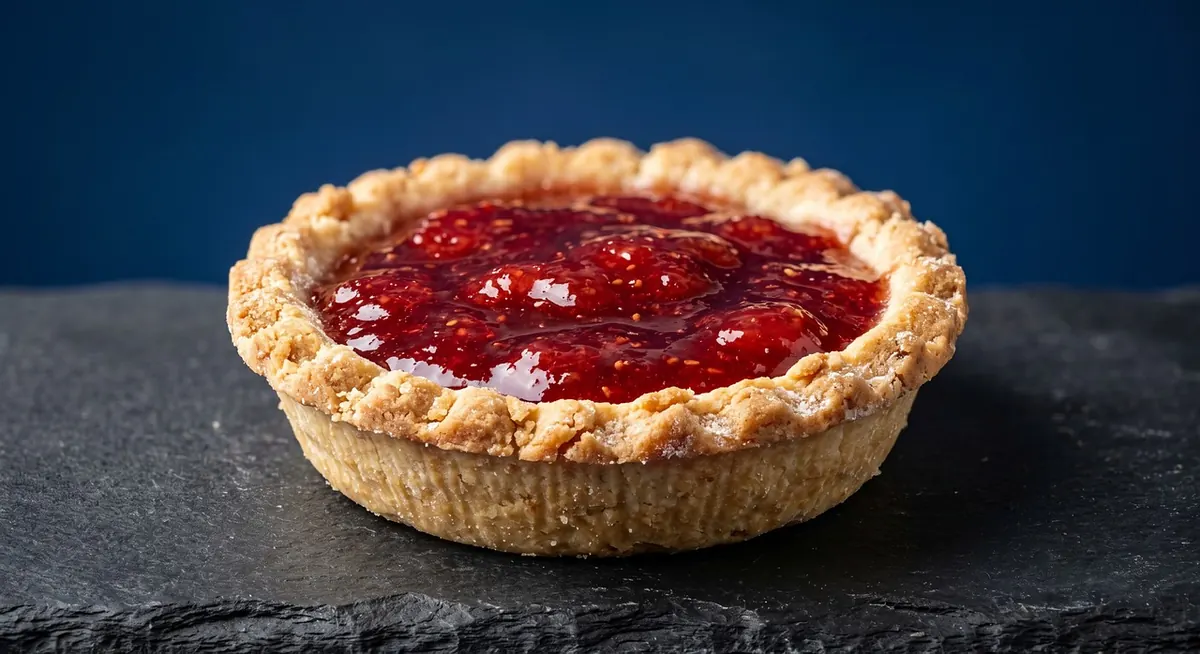
For a jam crostata, keep the layer of jam modest and bake the whole thing together, with the lattice strips rolled a touch thicker than the base. For wetter fillings such as ricotta or frangipane, blind bake the shell first with parchment and weights, then return it to the oven for a few minutes uncovered to dry the base. A light dusting of ground almonds or fine breadcrumbs over the raw base absorbs moisture and keeps the bottom crisp.
Cool it the right way
Leave the crostata in its tin for ten minutes, then lift it onto a rack. Leaving it in the tin for an hour traps steam underneath, which softens the base and then firms it into something leathery as it cools.
A short checklist before your next crostata
- Butter cold and cubed; bowl and flour chilled if the kitchen is warm.
- Mix until shaggy, press into a disc, stop.
- Wrap and chill for at least 30 minutes, ideally two hours.
- Weigh the flour, and add liquid a teaspoon at a time if needed.
- Roll to 3–4 mm, lift into the tin, never stretch.
- Freeze the lined tin for 15 minutes before baking.
- Bake at 180 °C until properly golden, then cool on a rack.
None of these steps takes longer than the version you were doing before. They just ask for a little patience at the points where it is tempting to hurry — and a crostata, more than most things, rewards that.
Photo: TehzeebNoah / Pixabay